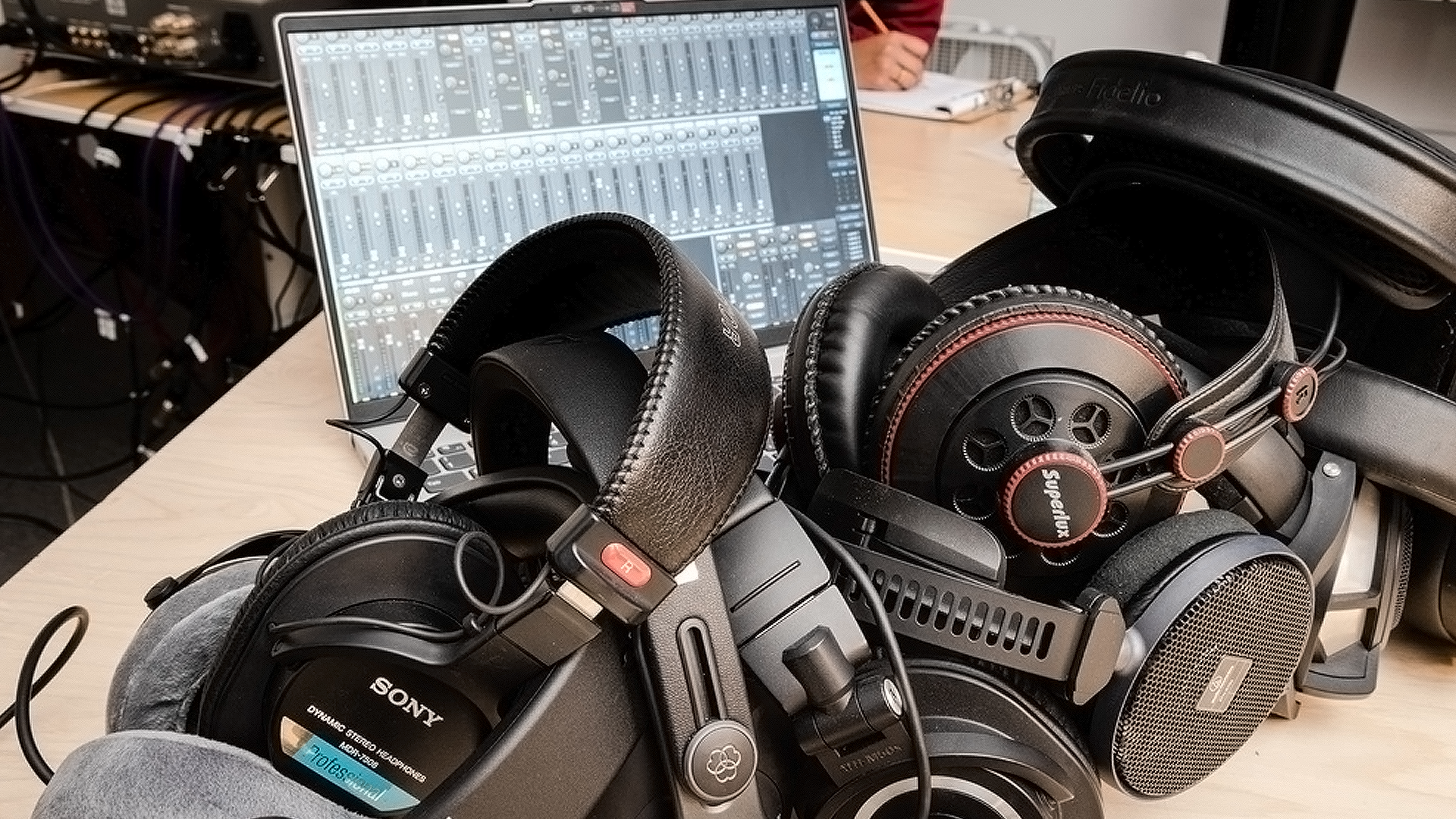

In 2026, vocal tracking is all about high isolation and zero bleed. When recording vocals, any “spill” from the headphones into the microphone can ruin a take, especially when using high-sensitivity condenser mics. To ensure a clean signal, you need headphones that seal perfectly while maintaining a frequency response that helps the singer stay on pitch.
Top 5 Closed-Back Headphones for 2026
These models have been selected based on Sound Transmission Loss (STL) tests and long-session comfort ratings.
| Model | Best For | Isolation Level | Impedance |
| Beyerdynamic DT 700 PRO X | Modern Professional | Excellent | 48 Ohms |
| Sennheiser HD 280 PRO | Maximum Isolation | Best in Class (32dB) | 64 Ohms |
| Sony MDR-7506 | Vocal Clarity | Moderate | 63 Ohms |
| Audio-Technica ATH-M50x | Versatile All-Rounder | High | 38 Ohms |
| Austrian Audio Hi-X60 | Premium Detail | High | 25 Ohms |
1. Beyerdynamic DT 700 PRO X – The New Standard
The DT 700 PRO X features the STELLAR.45 driver, engineered for high efficiency and low distortion across all devices.
- Why for Vocals: The velour pads are redesigned for a tighter seal without the heat buildup.
- The Research: Its frequency response is slightly boosted in the mids, which research suggests helps vocalists hear their own “pitch center” more clearly against a loud backing track.
2. Sennheiser HD 280 PRO – The Isolation King
If you are recording in a room with high-gain microphones, this is your safest bet.
- Proof-Based Spec: It provides up to 32dB of passive noise attenuation.
- The Advantage: Because it blocks so much external sound, the singer can keep the headphone volume lower, reducing ear fatigue during long tracking sessions.
3. Sony MDR-7506 – The “Honest” Monitor
A studio staple for decades, the MDR-7506 remains essential in 2026 for its “mid-forward” sound.
- The Science: It emphasizes the 2kHz–5kHz range, where human speech and vocal nuances live.
- Pro Tip: While the isolation is good, be wary of high volumes, as the thin pads can leak sound if they are worn out.
What Makes a “Tracking” Headphone?
Unlike mixing headphones, tracking headphones must prioritize isolation over soundstage.
- Passive Isolation: Look for headphones rated for at least 25dB of reduction to prevent click-track bleed.
- Impedance Compatibility: In 2026, most budget interfaces (like the Scarlett 2i2) perform best with headphones between 32Ω and 80Ω. Higher impedance (250Ω+) may sound too quiet without an external amp.
- Replaceable Parts: Vocalists sweat. Ensure the earpads are easily swappable to maintain hygiene and seal integrity.
Research Note: Studies in recording psychology show that vocalists perform better when they hear a “dry” version of themselves with a slight high-end lift. The Audio-Technica ATH-M50x is often cited as the favorite for this “hyped” feel that inspires a more energetic performance.